“Don’t miss” Places

Spots that are worth checking out, just for the heck of it.

Maroon Bells, near Aspen, Colorado

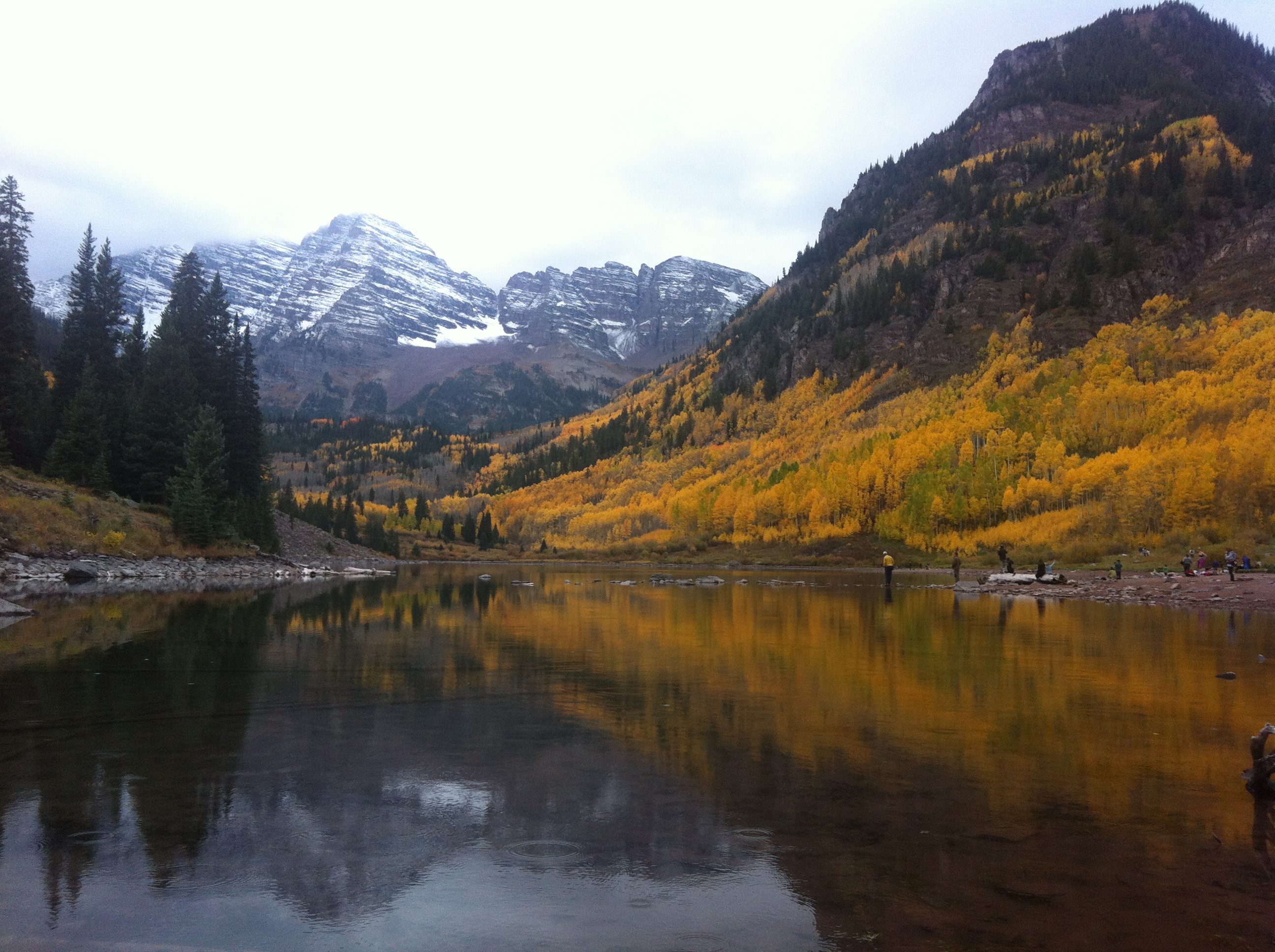
Before visiting Colorado, I had never heard of Maroon Bells, although any Google search will announce that it is apparently  the most photographed mountain range in North America. I’m not sure what I was expecting when I went, but I was extremely surprised and suitably awed.

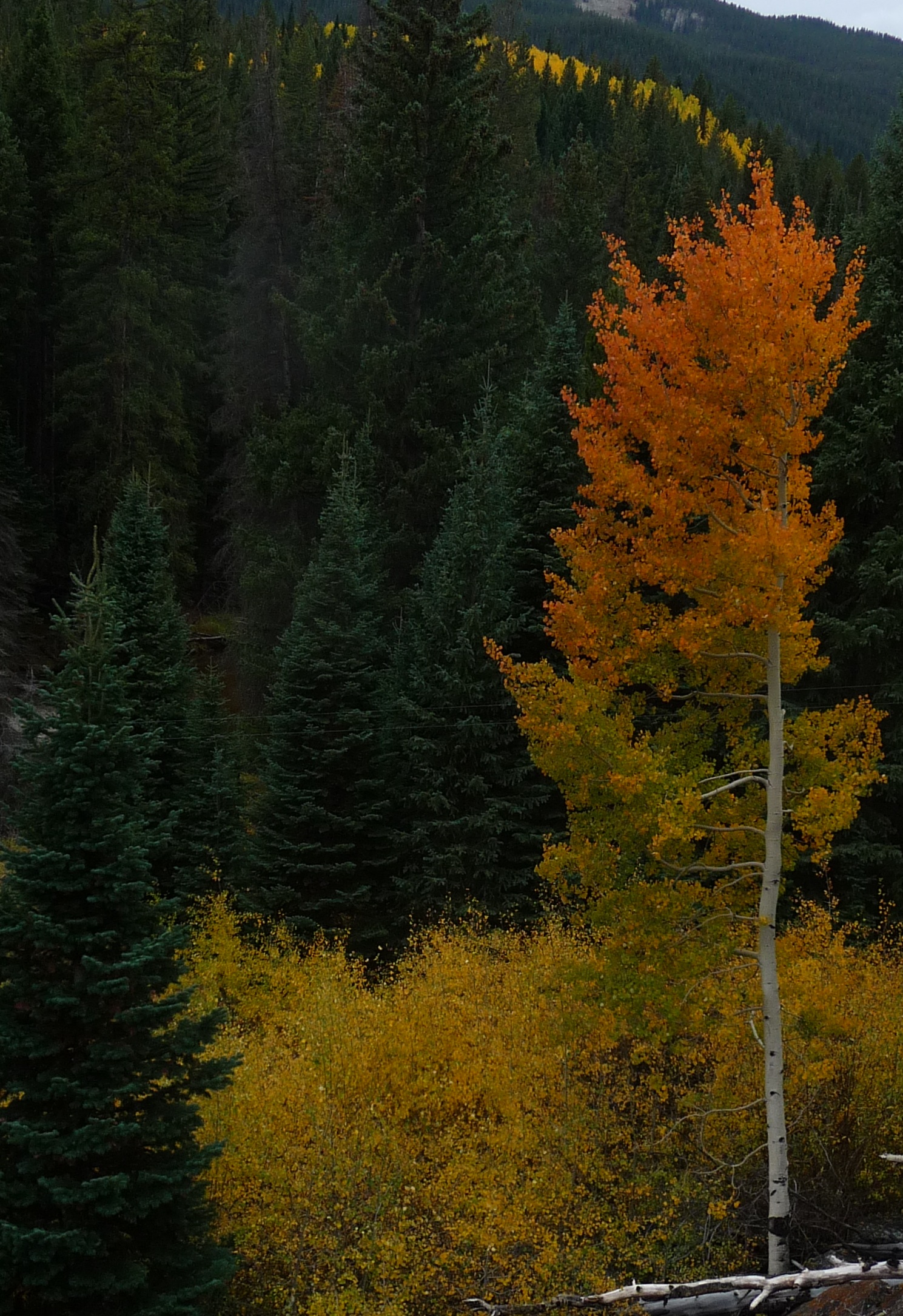
Fall foliage on the drive up to Aspen

Located 10 miles Southwest of Aspen, CO, Maroon Bells is a perfect day trip from either Aspen, Vail or the Boulder/Denver area.  There is a $10 charge to enter the park, which is well worth the lasting memories the views within will provide.  The drive up from the entrance gate is scenic, but provides little foreshadowing for what is to come.  There is a parking lot at the end with primitive bathrooms and a set of placards designated for providing information about the area.   But, who cares? I wanted to see the gems.

The “gems” are the Maroon Bells: two 14,000+ peaks, Maroon Peak and North Maroon Peak.  They are beautiful, in and of themselves, but what makes them spectacular is viewing them mirrored in Maroon Lake.  The view commands so much respect that even though there were probably two dozen people there the day I went, I was able to sit and enjoy the view in relative silence.

Fast-forward Workout:

There are a number of hiking trails in the area, but I think that the Maroon Bells can best be appreciated by following the path that leads around the lake.  It is a pleasant stroll that allows views of the glacial valley.  The area is so serene that it would have felt inappropriate to attempt any sort of strenuous workout; I was content with meandering around the lake.

The Maroon Bells

Bonus

On the drive up to Aspen from the Boulder/Denver area, take the scenic route through Leadville and Twin Lakes.  Leadville, at elevation 10,152 is the second highest incorporated city in the US, and is home to the Leadville 100: a 100-mile mountain bike and running race, which is epic both for its distance and altitude!  Twin Lakes, population 171 in 2010, is essentially a one-stop-sign town that would be easy to breeze through, if it weren’t for the breathtaking view from its “downtown.”

View from the town of Twin Lakes

Categories: "Don't miss" Places, Colorado, Hikes | Leave a comment

Joshua Tree National Park, Joshua Tree, CA

What do you get when Dr. Seuss, the makers of “The Lion King” and Mother Nature get together?

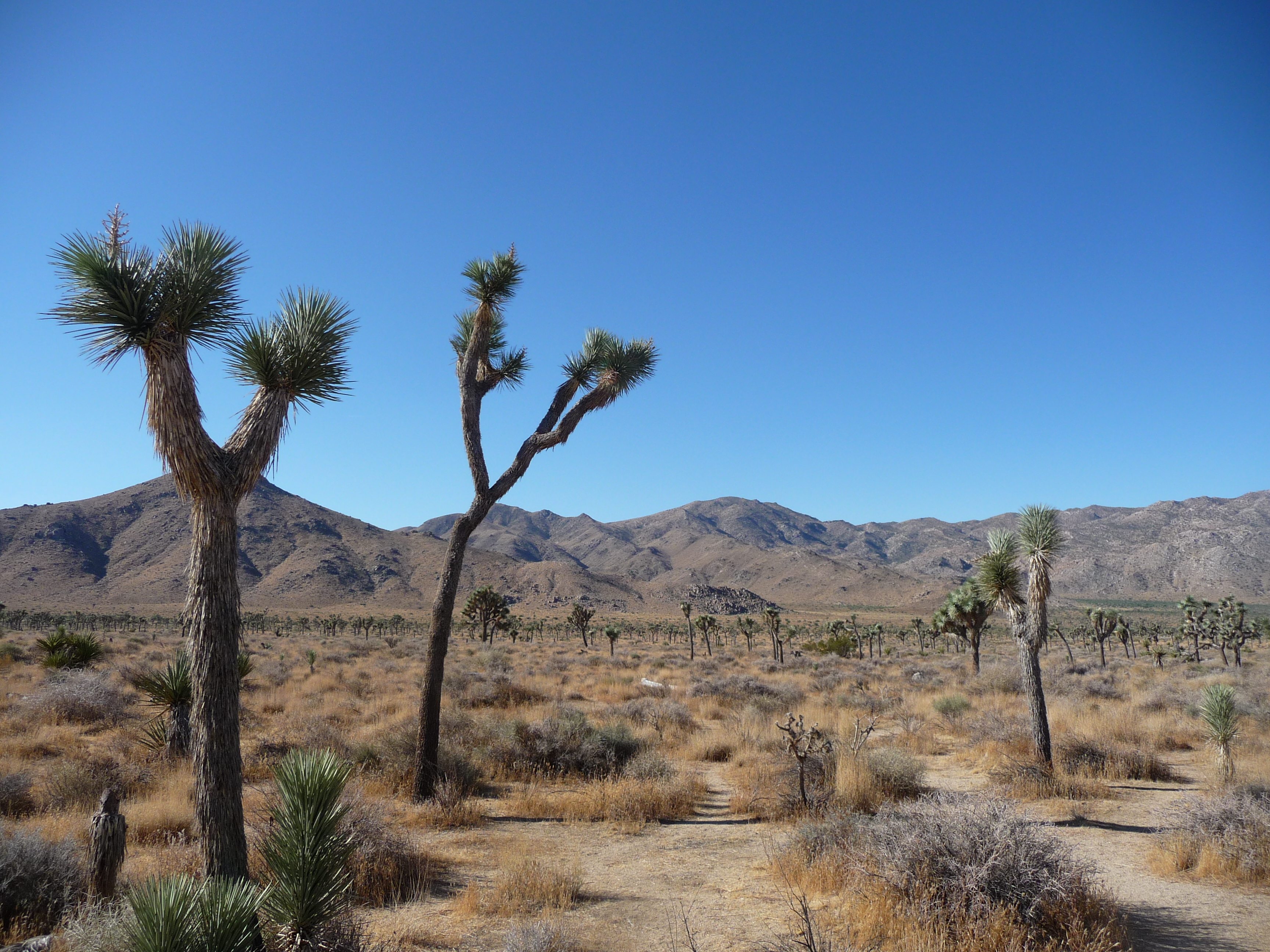
Joshua Tree National Park
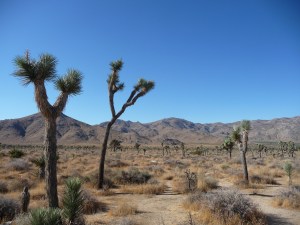
This bizarre park is unlike other national parks, in the type of allure it holds.  Some parks, such as Yosemite, offer overwhelming geological features–in Yosemite’s instance, massive granite walls that are so enormous and grand that you are diminished by their presence.  Other parks, such as Mesa Verde, offer such well-preserved ruins of ancient civilization that you are almost able to take a leap back in time when wandering around them.  Joshua Tree’s charm, on the other hand, lies not in history nor in overwhelming natural wonders, but rather in its mood.  Joshua Tree National Park is, at the same time, eerie and playful.  Views within the park are of a wide, dry and mostly barren valley, speckled with the comical-looking Joshua tree: a tall, twisty, prickly tree with awkwardly bent branches. The landscape is so empty, that it feels like you’re lost in the middle of Africa, somewhere far from civilization…or water.  And then, around the next bend in the road, you suddenly encounter a crop of giant boulders, and, if you’re like most people, you’ll want to get out of your car and go scramble around on them.

Joshua Tree National Park is located a convenient 140 miles east of Los Angeles, 175 miles northeast of San Diego, and 215 miles southwest of Las Vegas.  From Orange County, it took me 2 hours and 15 minutes to get to the town of Joshua Tree.  There are three park entrances: 2 on the North end and 1 on the South.  The top 2 are the most convenient from major cities, and there’s an easy loop from one of the North entrances to the other.

Fast Forward Workout: Lost Horse Mine, 4 miles (or 6.2 loop)

Lost Horse Mine Trail

I wanted to get a taste of three of the things the park has to offer: big rocks, barren landscape and human history.  This hike takes care of the latter two, and I was able to get plenty of the first one with short strolls off the main road.

To get to the trailhead, take the “Key’s View Road” off of the main loop.  Signs will point you onto a sandy road that will wind for several minutes to the parking area.  The road is narrow, so look out for oncoming traffic.  The parking area has a primitive outhouse, but no running water.  At this point, you are quite a ways from civilization, so make you sure you have PLENTY of water with you. 

The trail to the mine takes a left from the trailhead.  Out and back, it’s 4 miles, but you can continue on past the mine and do a 6.2 mile loop around and back to the parking lot.  It was a hot day and I only had two water bottles, so I opted for the shorter route.
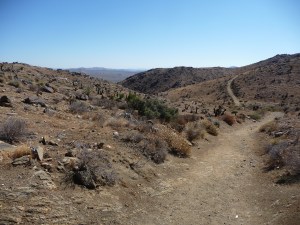
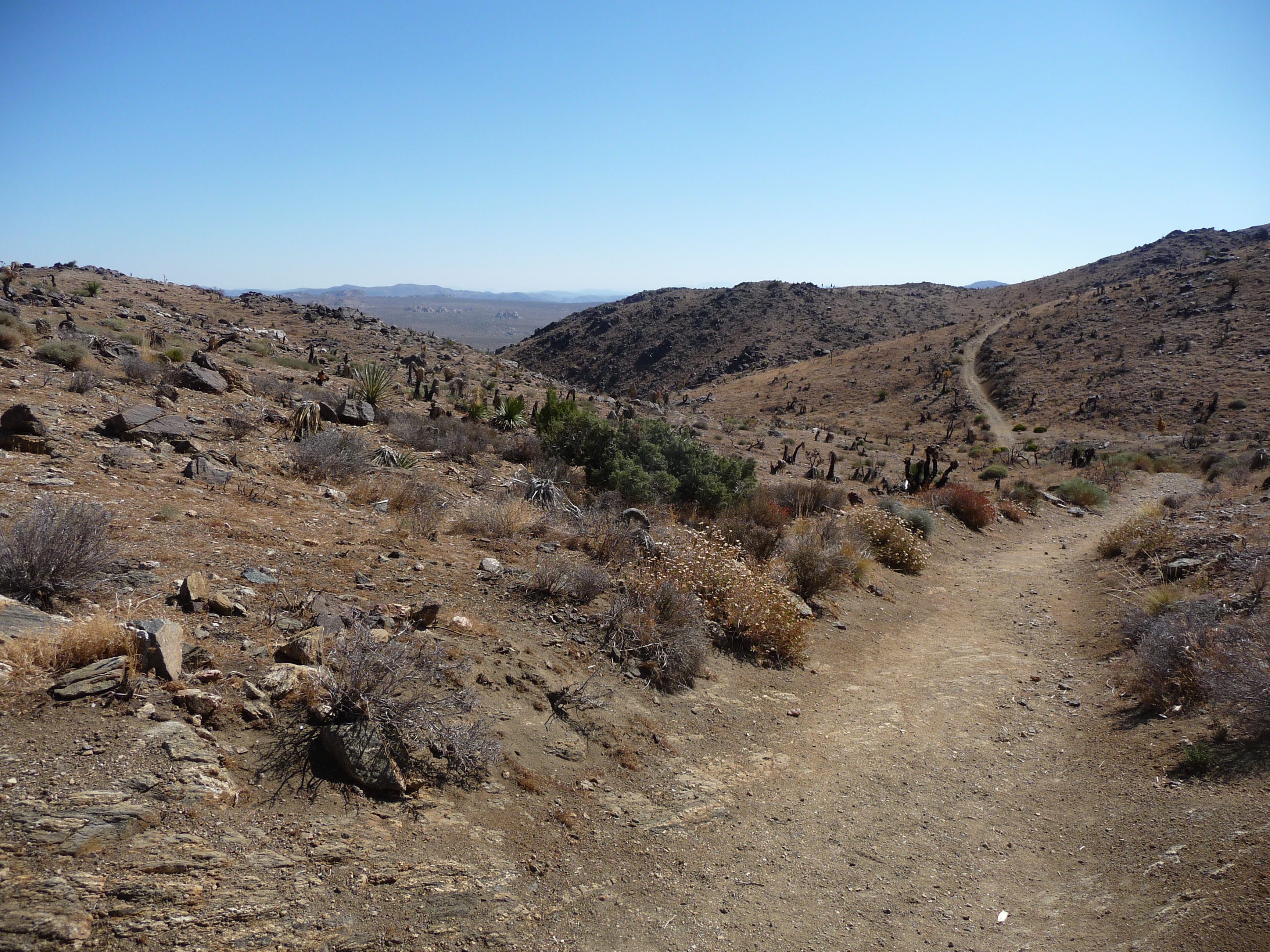
Lost Horse Mine Trail

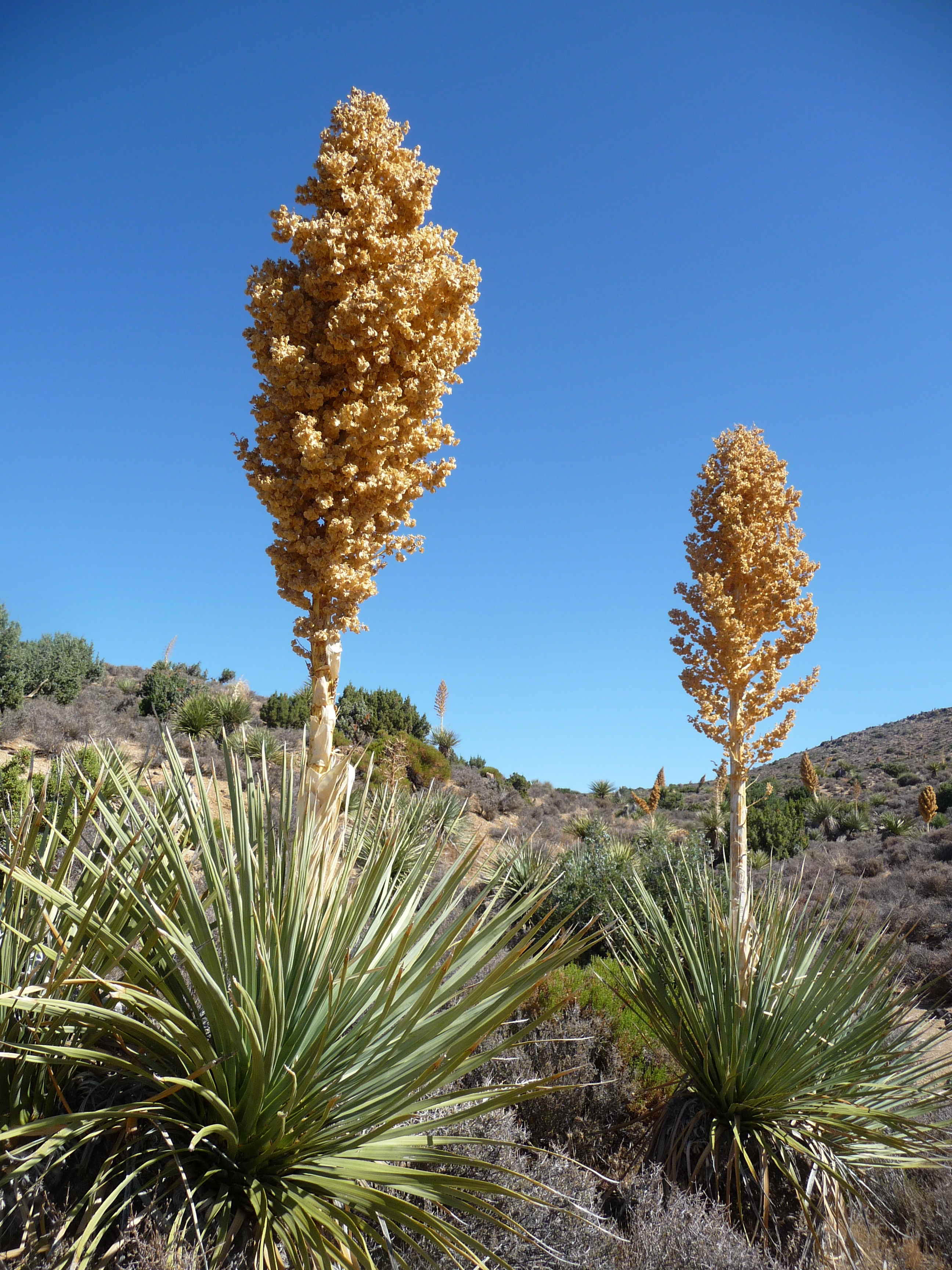
The trail is mostly uphill on the way out.  In the beginning, you run alongside lots of scrubby bushes and tall shoots of what looks almost like bundles of chamomile tea.  After awhile, the trail enters what I assume is the site of an old wildfire.  The views look out on a landscape filled with charred, gnarled tree stumps and very little greenery.  I felt like I was in the badlands from the movie, “The Lion King,” and expected, at every turn of the trail, to bump into the evil lion, Scar, and his hyena sidekicks.
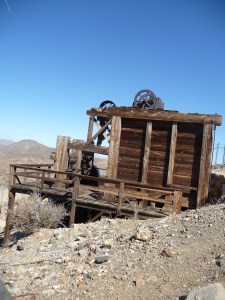
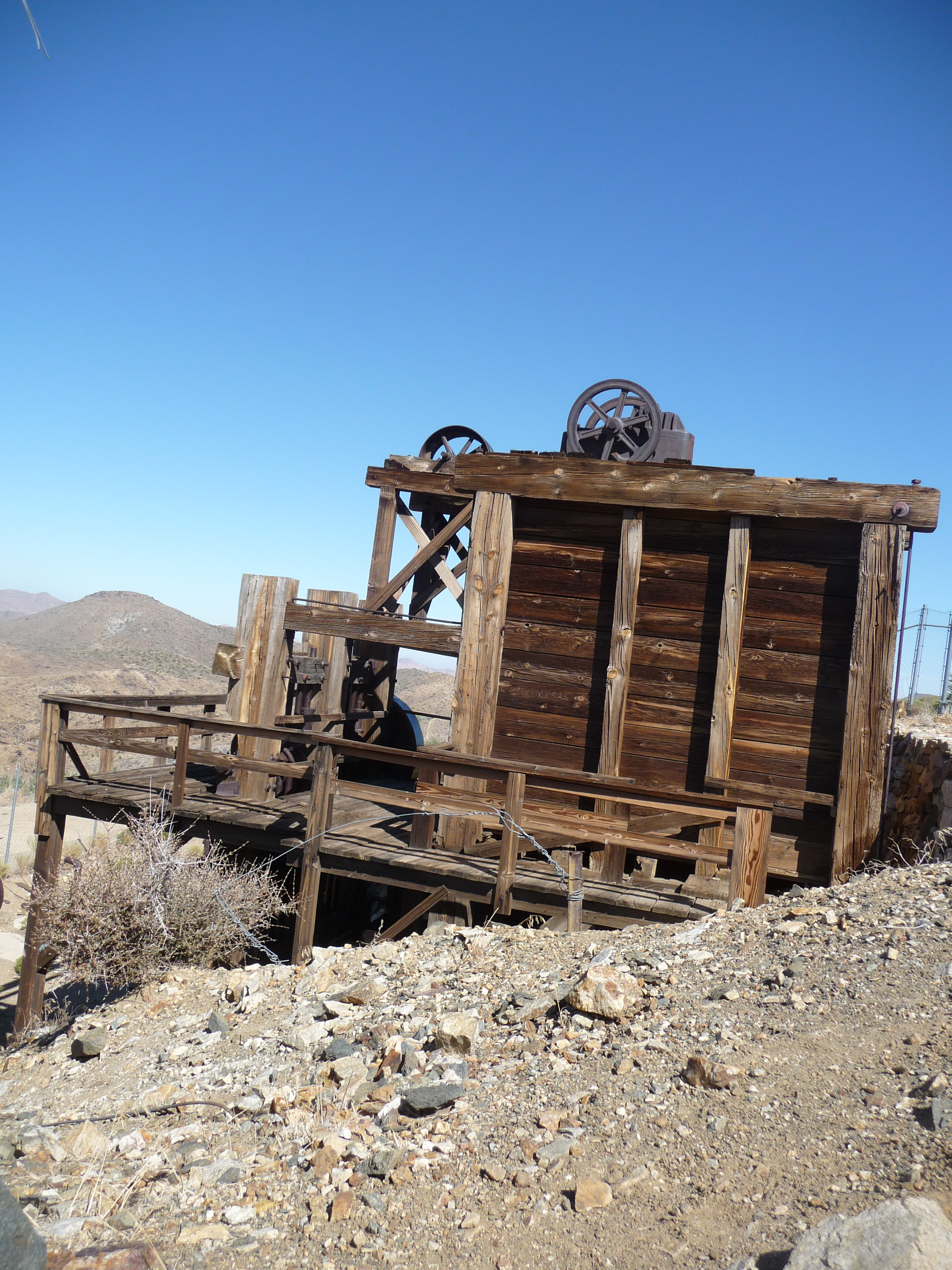
Lost Horse Mine

The trail rolls up and down for awhile.  You catch your first glimpse of the mine from a ways out and can see the switchbacks you’ll take up to the top.  The mine is locked away behind a chain-link fence, but you can get a taste for what it used to be like.  The history of the mine is impressive.  There were several mining attempts in the Joshua Tree area, but few were successful.  Lost Horse Mine was one of the exceptions,

producing 10,000 ounces of gold and 16,000 ounces of silver between 1894 and 1931 (which would value at about $5 million today).  After looking at the mine, check out the views from right above (elevation 5,278 feet!), which are wide and extensive.
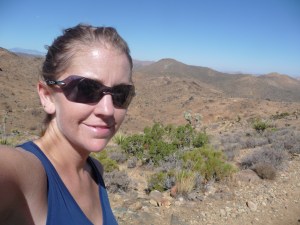
View from elevation 5,278!

There’s not a lot of traffic on the hike.  I ran into two groups of people the entire time.

The way back is mostly downhill and relatively easy.

Bonus:  Ryan Ranch, 1 mile out and back
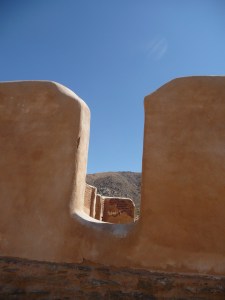
The Ruins at Ryan Ranch

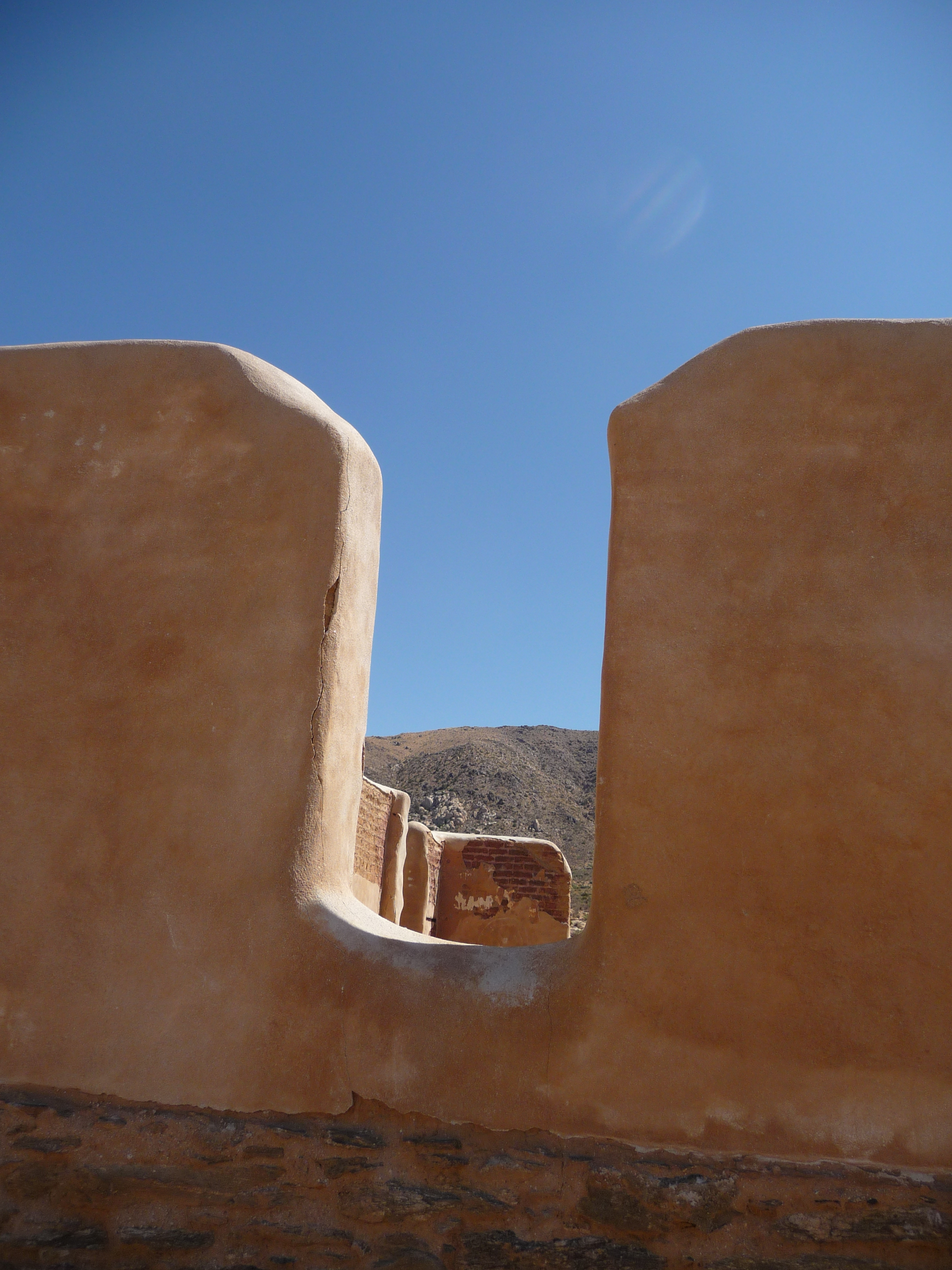
From Lost Horse Mine, take Key’s View Road back to the main road.  Turn right.  Very shortly, on the right, will be a pullout for Ryan Ranch.  There’s a flat, one-mile out and back trail to the ruins of Ryan Ranch.  Circa the 1890s, Ryan Ranch was the home of the owners of Lost Horse Mine.  The ruins show signs of deterioration and vandalism, but are still fun to climb around on and explore.


Bonus: Jumbo Rocks Campground

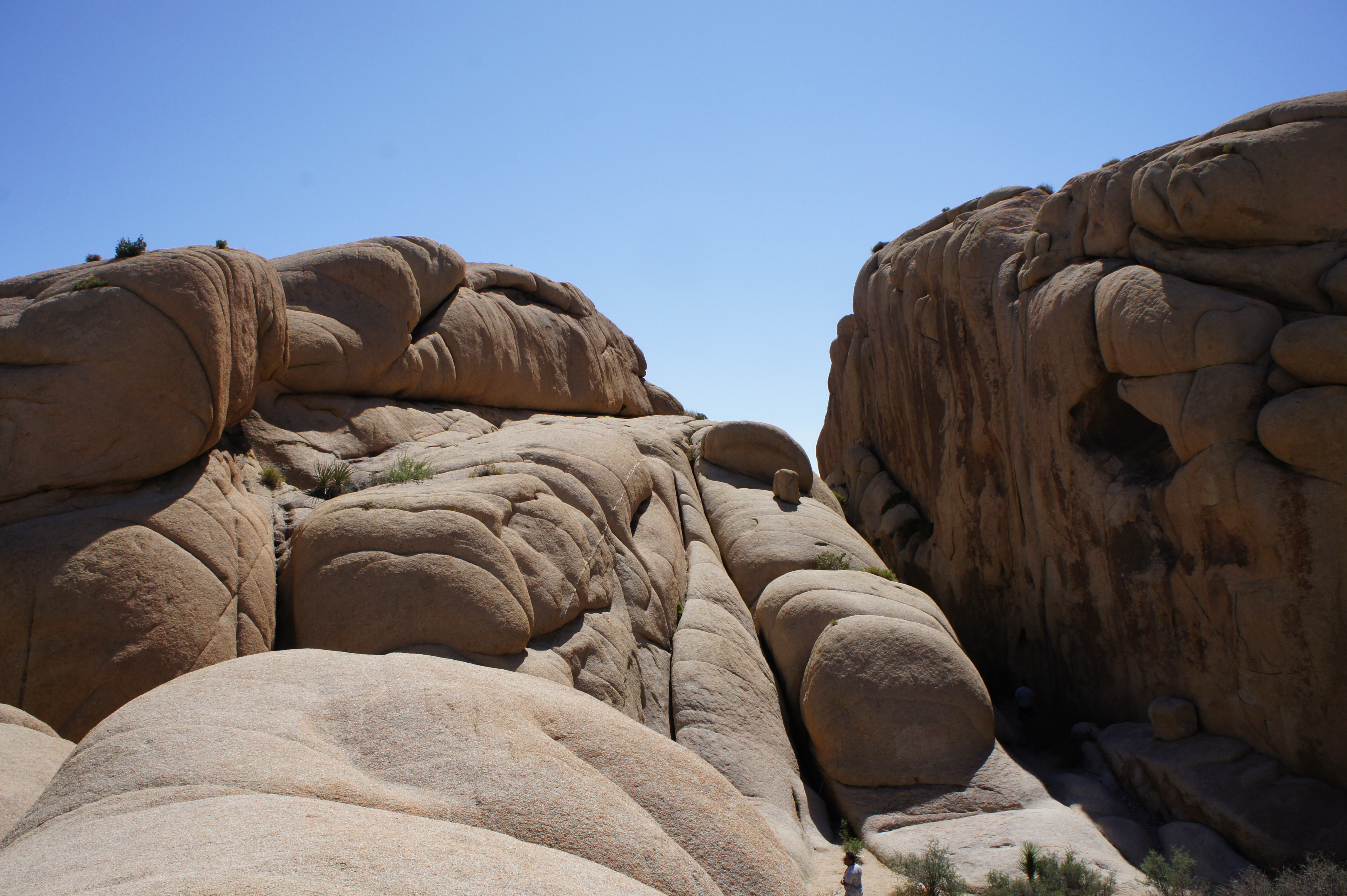
The child in me came out when I decided to stop at Jumbo Rocks Campground.  I had read about it before coming to the park, and knew that I’d want to come camping at some point, but I didn’t realize how much fun it would turn out to be.

After Ryan Ranch, drive (toward Oasis Visitor’s Center) for several miles until you see signs for the Jumbo Rocks Campground.  There are parking spots for non-campers, and you have immediate access to the gigantic boulders that give the campground its name.  I took my camera and joined the other people who were all just hanging out on the rocks.  It was a like a gigantic jungle gym, and we all looked like overgrown children, jumping from rock to rock, shimmying up and down the sides of boulders and attempting to scale steeper sections.
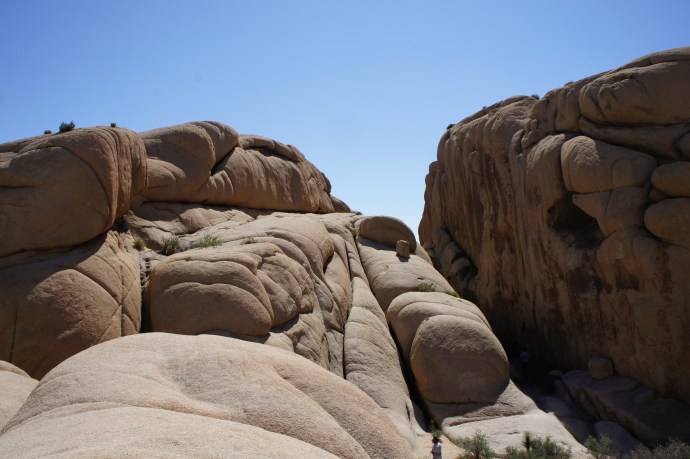
Jumbo Rocks Campground
Categories: "Don't miss" Places, Hikes, History, National Parks, Southern California | Leave a comment

Arches National Park, Moab, UT

I have been to Arches National Park probably half a dozen times in my life.  I have a favorite trail that, if memory serves me correctly, I have hit up every time I’ve been.  It’s the perfect length for a solid run/hike, it samples a little bit of everything the park has to offer, and, while it’s packed with high-heeled tour bus patrons at the very beginning, the far end of the loop is usually only sparsely populated.

Arches National Park is located a few miles North of Moab, Utah, the well-known mecca for mountain bikers.  Because mountain biking usually causes me to fall a lot, I skip the bike trails and hit up the hikes the area has to offer.

Pine Tree Arch

Since I’m always on a budget (and I’d rather spend money on events, not on where I lay my head down at night), I recommend two places: Lazy Lizard Hostel or any of the campgrounds (I’ve stayed at the “Moab Rim Campark.”)  The Lazy Lizard Hostel costs an amazingly low $9/night for a room in a mixed-sex dorm.  There are several dorms and also private cabins in the back of the property.  There are showers inside and a functional (but not particularly tidy) set of showers in a building in the backyard, as well.  At $9, I feel that you get more than what you paid for.  There’s a cozy social area with the requisite reading materials (Readers Digest, National Geographic and several books you’ve never heard of); an ancient, wheezy Apple iie-era public computer with dial-up internet; a slew of popular (and not-so-popular) board games; a cooking area; and a number of tables and saggy couches, from which to plan out your adventures.

There are also numerous campgrounds in the area.  There are really too many to choose from to have something to say about them all.

Arches National Park is only about 5 miles North of Moab.  The trail head for my favorite hike is all the way on the far end of the park, but the drive through is utterly amazing.  It simply doesn’t look real.  The colors are outstanding and the rock formations along the way are big and bizarre and bulbous.  Traffic can be a bit thick, as there’s only one road through the park, but the sights along the way are so breathtaking, you really won’t mind the drive.

Fast-forward workout: Devil’s Garden Primitive Loop, 7.2 mile loop

Park in the Devil’s Garden parking lot.  There are a few shorter hikes (rather, strolls) that a lot of tour bus patrons shuffle along, but it only takes a few minutes to get past them and on to the virtually empty “primitive” part of the trail.  Also, it’s a loop; most of the people will be trekking out to see Landscape Arch, which means they’ll be going clockwise.  All you have to do is go counter-clockwise.

Devil’s Garden Primitive Trail Loop

BRING LOTS OF WATER.  I have a very distinct memory from early childhood of hiking the trail with my family with only a juice box per person and having our dehydration level reach scary heights.

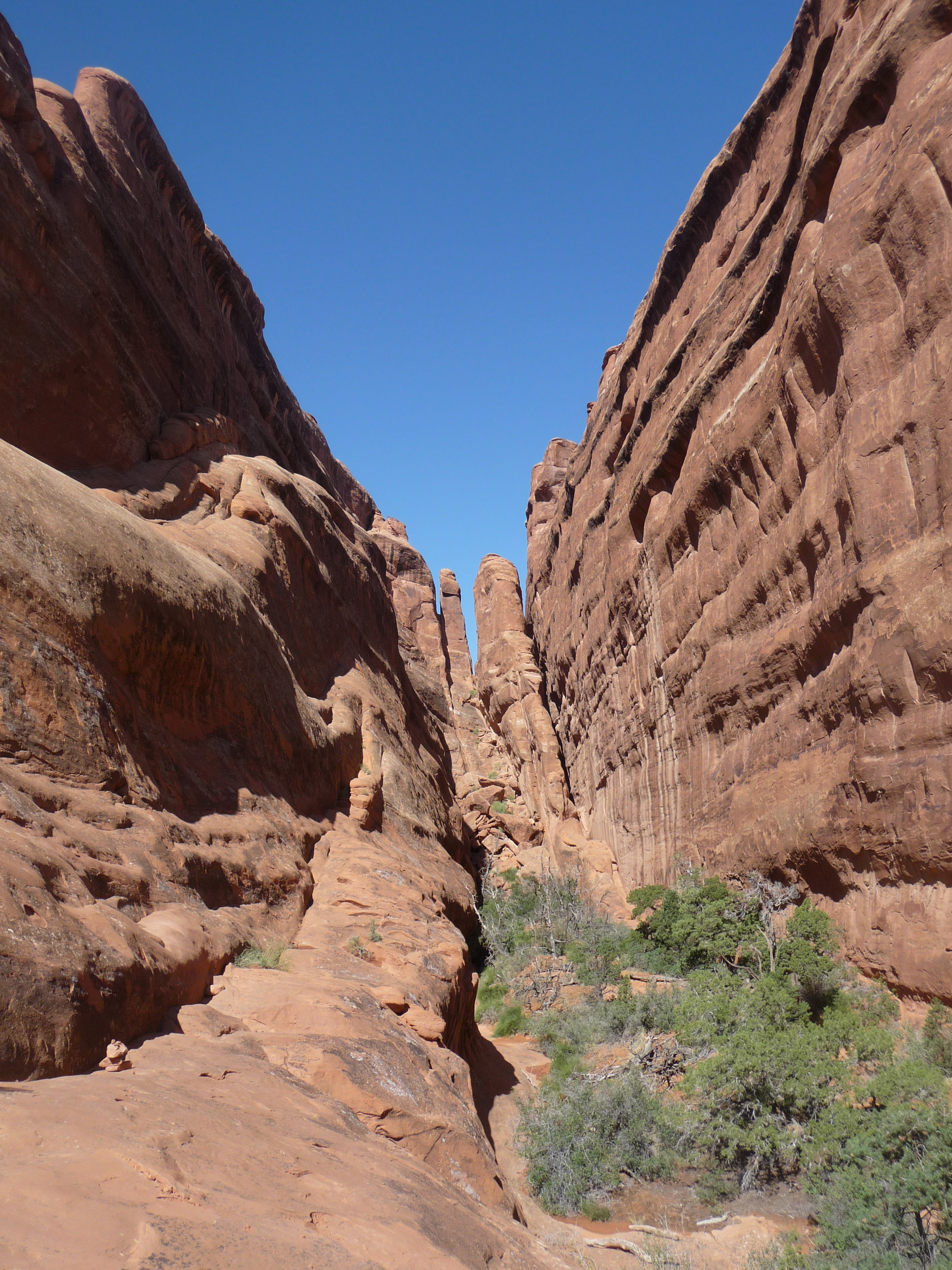
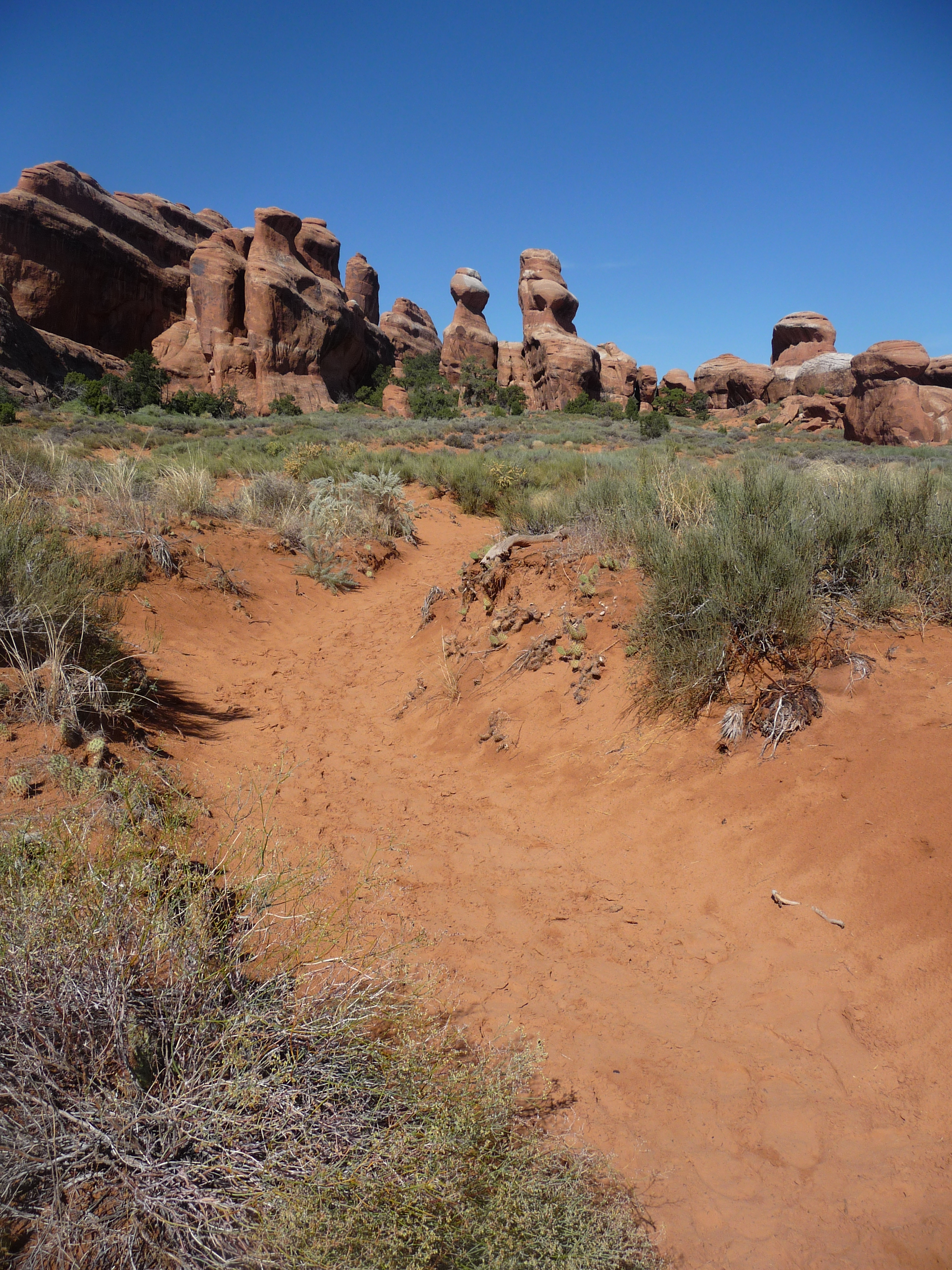
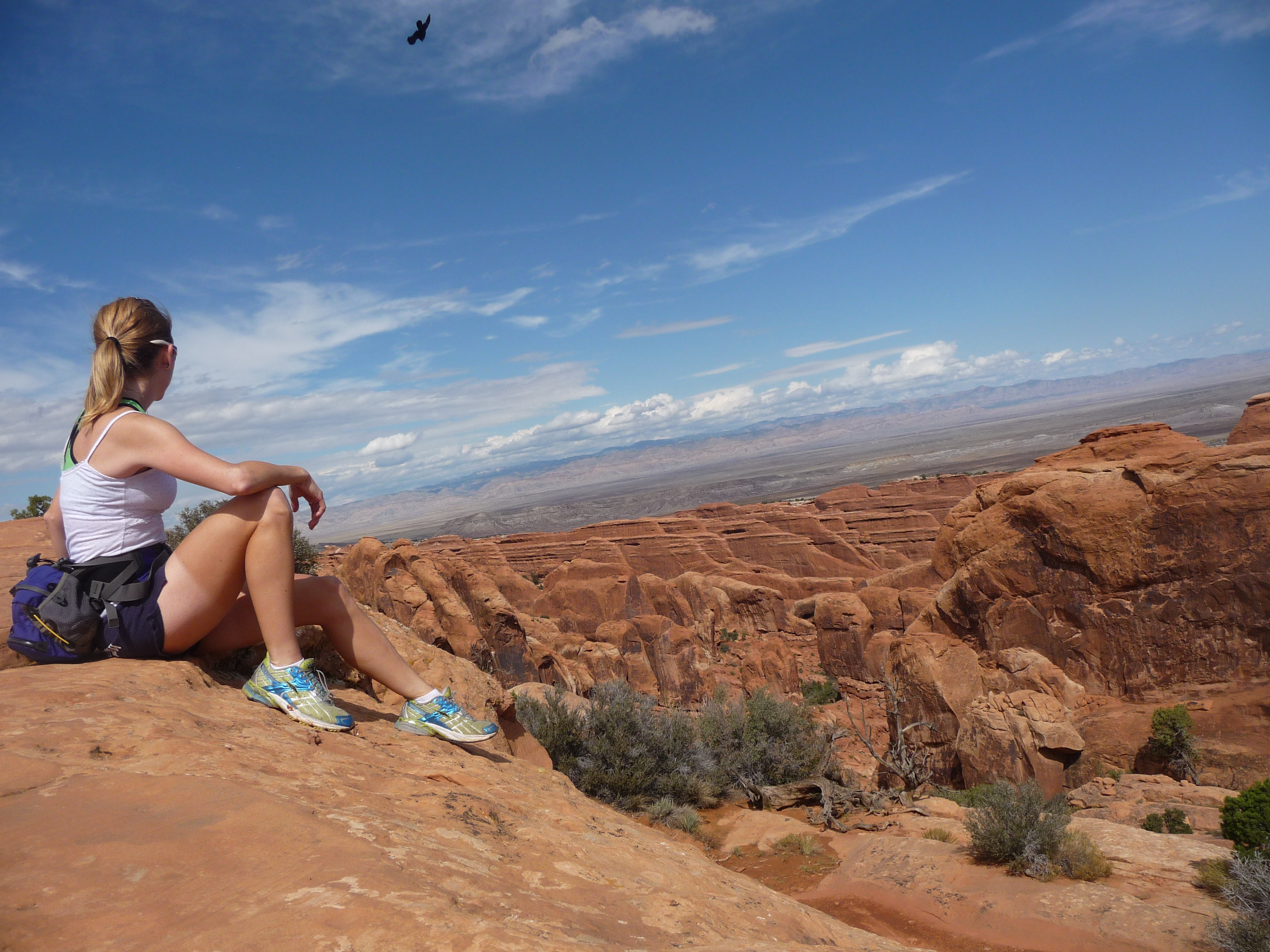
The hike is awesome.  Again, I recommend doing it counter-clockwise.  It starts out with a jog through a sandy, dessert setting.  It’s hot and there’s no shade, but the contrast between the richly red sand, the green sagebrush and the crisp blue sky is awesome.  At every turn of the trail, there’s a photo-op.  Further on, the trail involves a lot of scrambling over boulders and rocks and walks along narrow rock ledges.  I’m scared to death of heights and cliffs, but I can manage this part.  The views are definitely worth it.  At this point in the hike, the “trail” goes mostly over rocks and boulders, so you have to follow the rock cairns in order to stay on the right track.

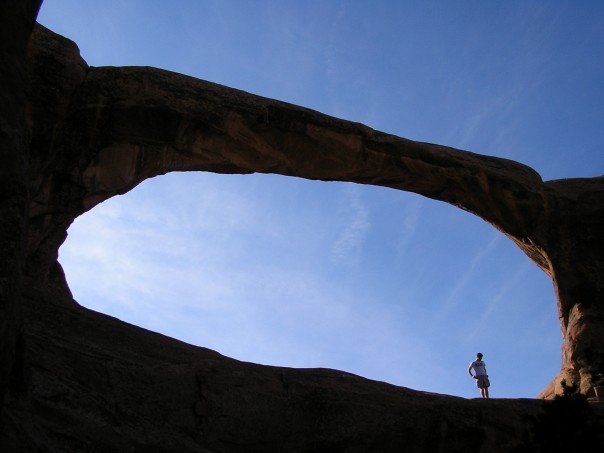
Eventually, after much scrambling up and over rocky areas, the trail dumps you back on solid (dirt) ground, and there are several arches to explore.  Private Arch, Double O Arch and Dark Angel are all accessible from this part of the trail.  This is about halfway through the hike, so it’s a good idea to take some time out to look at the arches and rehydrate.  Double O Arch is my favorite.  There’s a large circular opening on top and a much smaller one on the bottom.  With a little finagling, you can get up into the top one, and it provides a pretty unique photo op.

The top part of Double O Arch

The way back involves more trips over rocks and then flattens out for the last part.  The last stretch is usually frequented by the tour bus crowds.  You can expect to bump shoulders and fight for a spot from which to snap photos of Landscape Arch, but it’s a pretty unique arch.  At 290 feet wide, it is the longest arch in the park, and the second longest in the world (behind Kolob Arch, in Zion National Park).

View from up above (nice tan lines!)

Bonus:

Make sure to visit nearby Dead Horse Point State Park and Canyonlands National Park.


Categories: "Don't miss" Places, Hikes, National Parks, Utah | 1 Comment

Great Sand Dunes National Park, southern Colorado

San Juan Valley

Located in the middle of absolutely nowhere, Colorado, is an incongruous geographical feature: a small pocket of sand dunes, nestled against the Sangre de Cristo mountains, on the edge of the vast San Juan Valley.  Don’t quiz me on the details, but these sand dunes were formed something like this:  shifting plates caused the Sangre de Cristo Mountains, the San Juan Mountains… and the San Juan Valley in between.  Water from the mountain streams flowed down to form lakes in the valley.  Due to climate change, over time, the water receded and the lakes dried up, leaving behind sand and sediment.  Prevailing southwest winds blew the sand across the valley floor and up against a curve in the Sangre de Cristo mountains, where it built up into dunes.  During storms, opposing winds blow the sand back up against itself, building the dunes even higher, making them, in fact, the highest dunes in North America (now how is THAT for a claim to fame?!).

To me, the dunes looked kind of like whipped egg whites, plopped down against the rim of the flat, empty valley.

The start of the Trail. Continue straight for Mosca Pass Trail, or turn left for Dunes Overlook/Sand Ramp Trail

Fast-forward workout: Wellington Ditch Trail/Dunes Overlook/Sand Ramp Trail,

Start at the parking lot for the Mosca Pass Trail. The Wellington Ditch trail shoots over to the campground, and from there, it’s 2 miles, round trip, to the Dunes Overlook, but the hike can be extended, as the Sand Ramp Trail continues for 11 miles.  I only had about two hours, so chose to run part of the trail and then round out my park experience with a quick trip to the dunes.

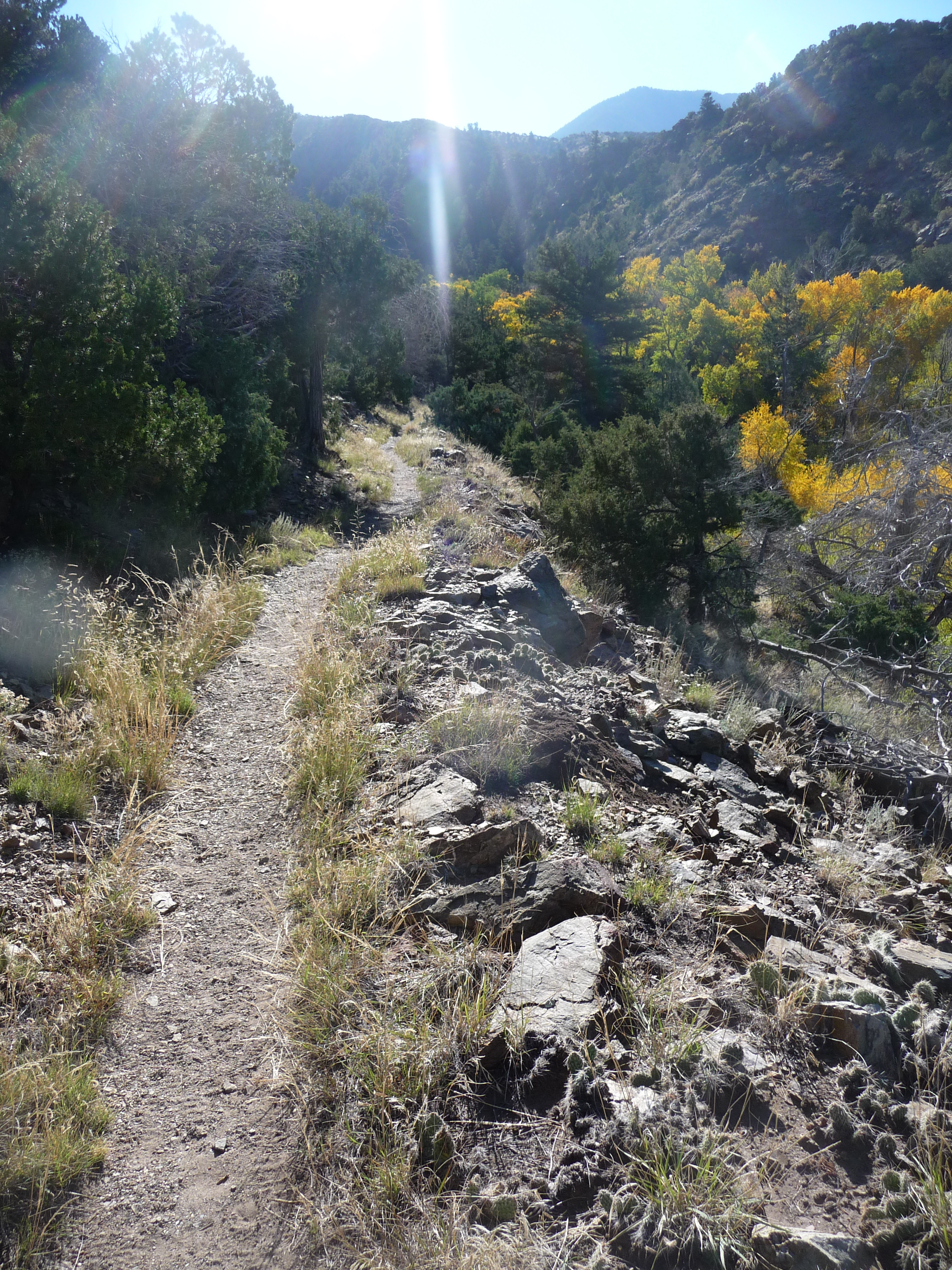
Dunes Overlook/Sand Ramp Trail

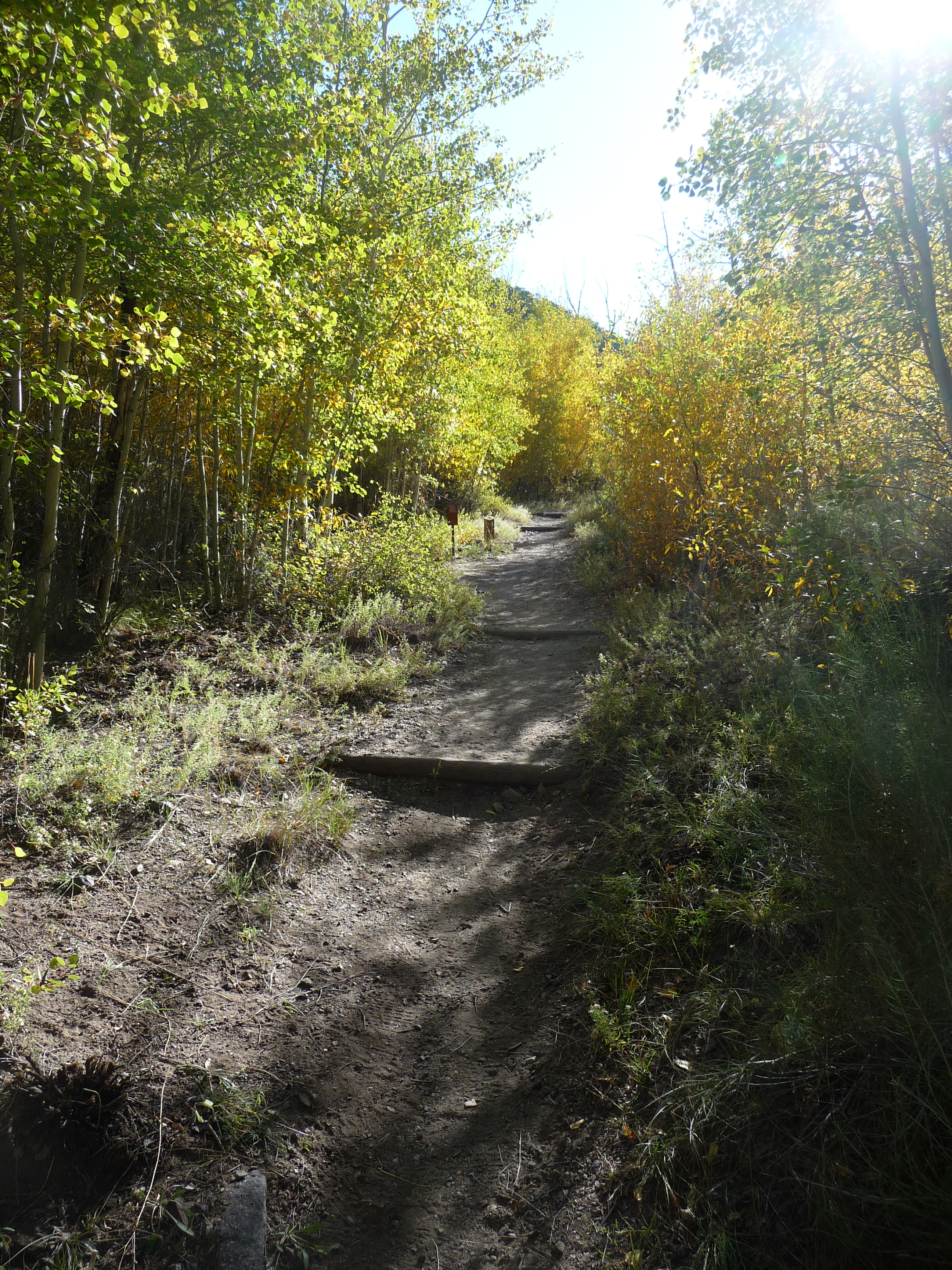
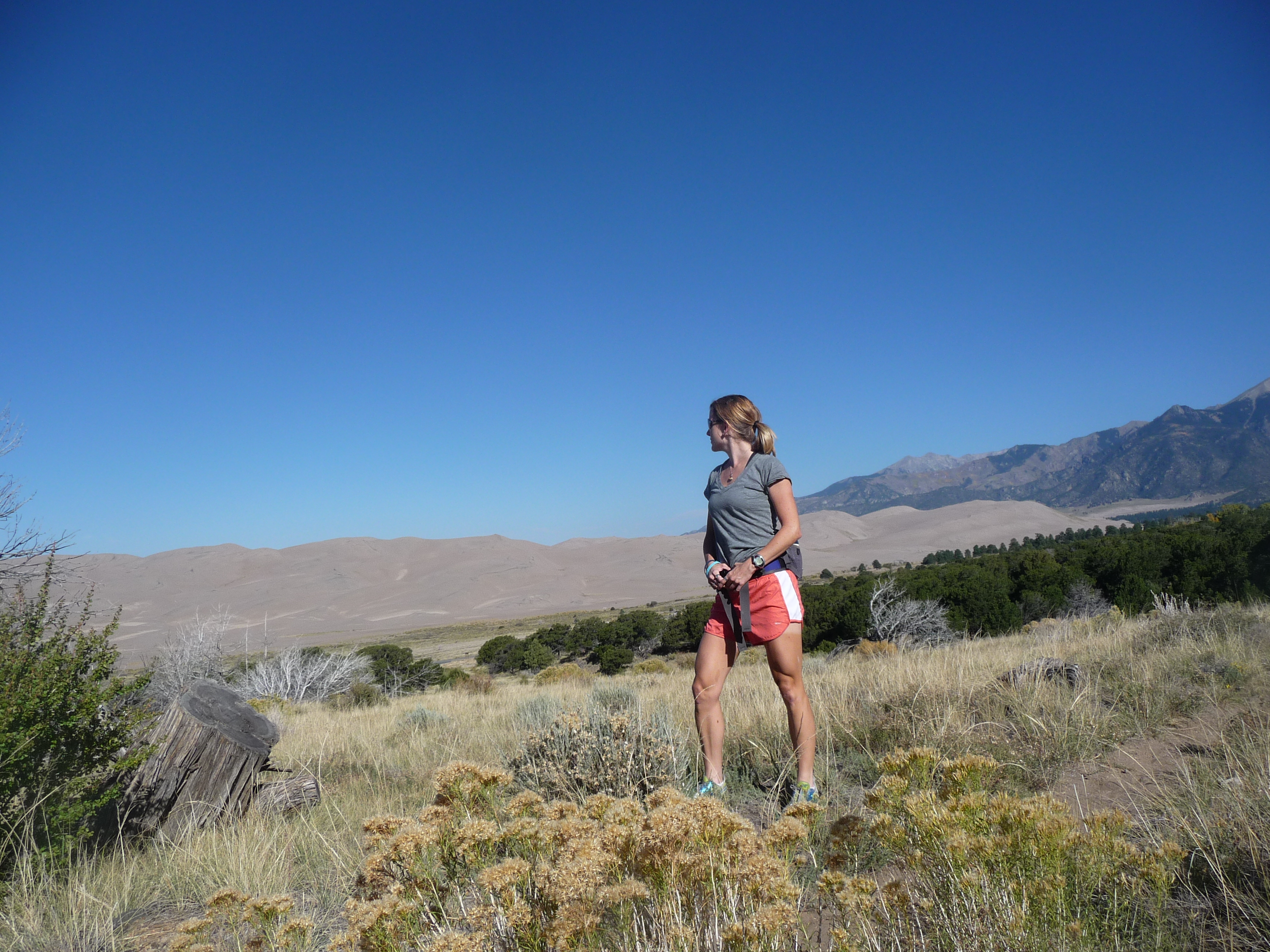
The Wellington Ditch hike starts in the shade and then runs along the base of the mountains. You get a little bit of everything on the hike: golden cottonwood and aspen trees (how can you go to Colorado and avoid seeing an aspen?), gnarly Rocky Mountain juniper and Pinyon trees, and scraggly prairie grass.  And, of course, all along the path, you get to look out on the dunes.  There are plenty of photo-ops, and if you’re running solo like I was, there are plenty of tree stumps on which to put your camera in order to snap some self-portraits.

The jog is an easy one.  The path is well-marked and fairly flat and there are sections of shade, which offer a respite from the heat.  Once the path hits the campground, continue onto the official Overlook/Sand Ramp via Loop 2 of the campground.

Dunes Overlook/Sand Ramp Trail

Tips:  I’d suggest going in the fall, when the trees are a brilliant yellow and the temperatures are mild.  Also, the park is at altitude, so be prepared for light-headedness. The visitor center and campground (through which the trail passes) are at approximately 8,200 feet above sea level.  Drink plenty of water, and stop at the benches along the trail to catch your breath.

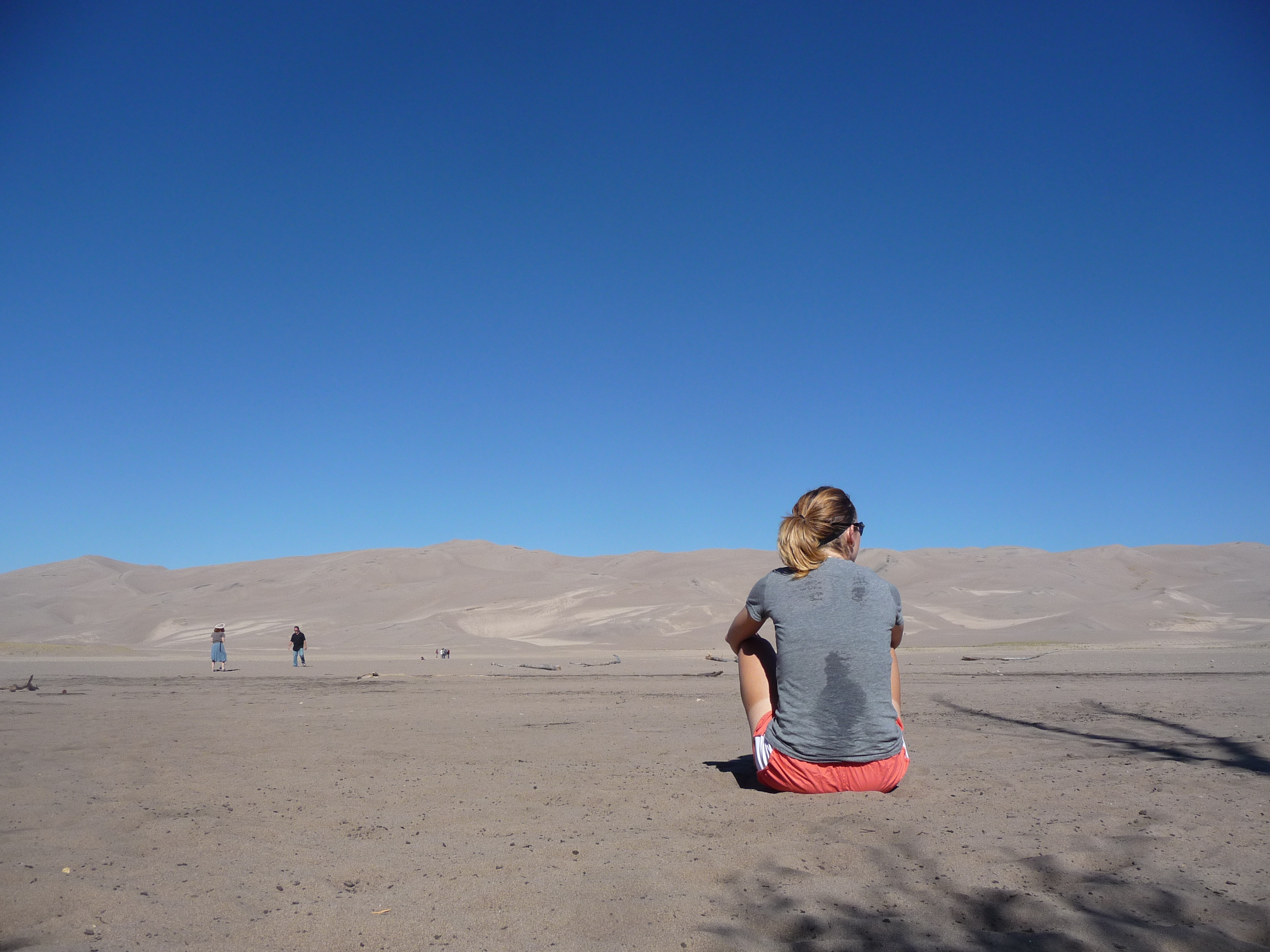
Bonus:  After enjoying the dunes from a distance, head down to the Dunes parking lot.  The sand starts only feet from the parking lot.  The dunes are 100% open for wandering, but you can get a feel for it just by hiking up the first dune you reach.  I ran around in the sand until my calves ached, watched some kids sledding down the slopes, snapped a few self-portraits and headed out.

The Dunes, as accessed from the Dunes Parking Lot

Categories: "Don't miss" Places, Colorado, Hikes, National Parks | Leave a comment

Create a free website or blog at WordPress.com.